


Sprache
:

Sprache
:
Diethylenetriamine DETA, CAS 111-40-0, is a high-purity aliphatic amine curing agent for epoxy systems, supplied at a 99% minimum assay. Two primary and one secondary amine group give fast room-temperature cure in coatings, laminates and adhesives. Standard packing is a 195 kg steel drum or isotank.
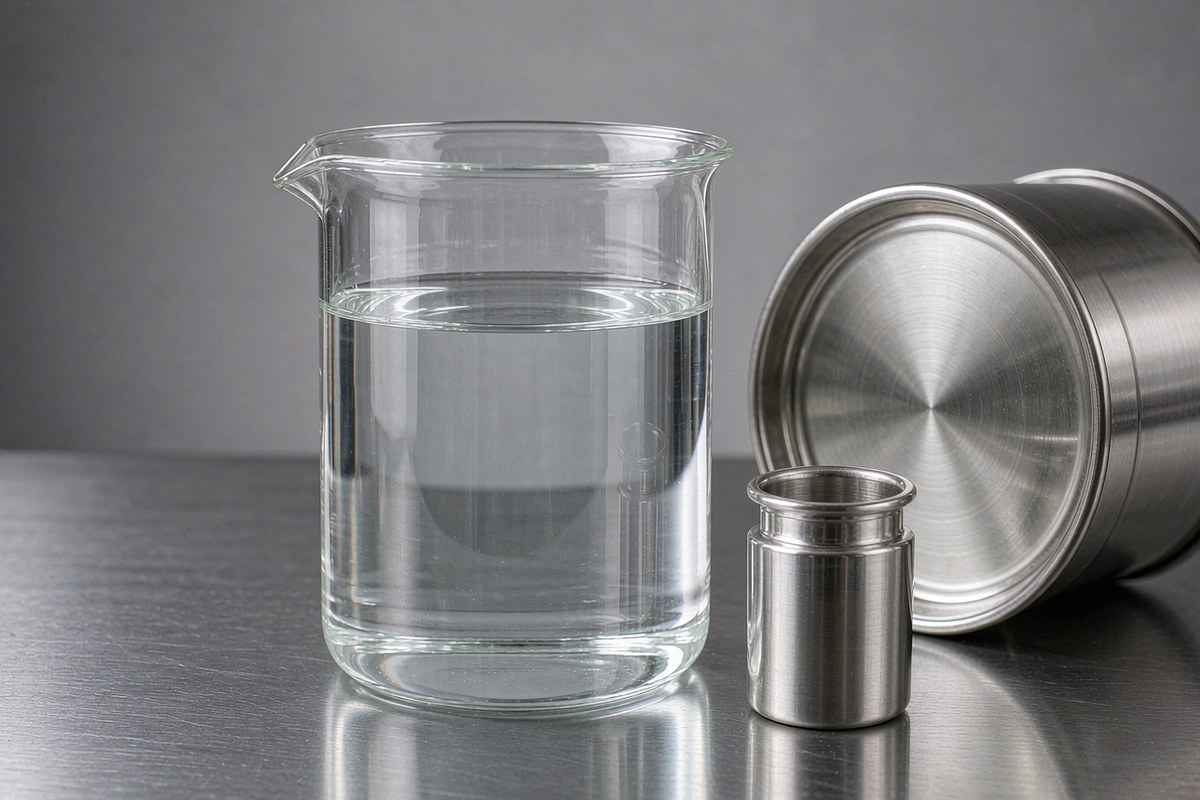
Product Name: High Purity Diethylenetriamine DETA
CAS No.: 111-40-0
Product Category: Curing Agent (Aliphatic Amine)
Diethylenetriamine DETA ships as a colorless to light-yellow liquid in 195 kg drums or isotanks, at a minimum 99% assay with water content limited to 0.50%. The identity data below come from the published product page; reference figures are marked as such and confirmed against the COA for each lot.
Item |
Information |
Product name |
High Purity Diethylenetriamine DETA |
Chemical name |
Diethylenetriamine (DETA) |
CAS No. |
111-40-0 |
EC No. |
203-865-4 (standard reference) |
Molecular formula |
C4H13N3 |
Molar mass |
103.17 g/mol |
Synonyms |
1,4,7-triazaheptane; 2,2'-iminodi(ethylamine) |
Product category |
Curing agent (aliphatic amine) |
Diethylenetriamine DETA is an aliphatic ethylene amine with two primary and one secondary amine group, so each molecule offers five active hydrogens for epoxy ring opening. Those five hydrogens give a theoretical amine hydrogen equivalent weight of about 20.6 g/eq, calculated from the 103.17 g/mol molar mass. The reaction is a ring-opening addition between the N-H sites and the epoxide ring, and it runs fast at room temperature while releasing noticeable heat. That exotherm is why small working batches are standard practice on most lines.
The product page lists the liquid as strongly alkaline and corrosive to copper and its alloys. It dissolves in water, acetone, benzene, ether and methanol, but not in n-heptane. A high crosslink density follows from the three nitrogen sites, which suits chemical-resistant coatings and adhesives. The same reactivity shortens pot life, though; in practice, open time at room temperature is measured in minutes, not hours.
DETA cures faster than most site-listed amines because its AHEW of about 20.6 g/eq is the lowest in this group, so less hardener is needed per 100 g of resin. The trade-off is a short pot life and a higher exotherm. If a line needs hours of open time, a slower grade from the same catalogue is the safer pick; the table below compares the published figures.
Property |
DETA |
DACH |
MXDA |
MACM |
DMTDA |
Structure class |
Aliphatic triamine |
Cycloaliphatic diamine |
Aromatic-side diamine |
Cycloaliphatic diamine |
Aromatic diamine |
CAS No. |
111-40-0 |
694-83-7 |
1477-55-0 |
6864-37-5 |
106264-79-3 |
Assay or purity |
Min. 99% |
Min. 99.0% |
Min. 99.0% |
Min. 99.0% |
Min. 95% |
Amine value |
approx. 1630 mg KOH/g (calc.) |
Min. 900 mg KOH/g |
not published |
not published |
515-535 mg KOH/g |
AHEW |
approx. 20.6 g/eq (calc.) |
28.5 g/eq |
approx. 34 g/eq (calc.) |
60 g/eq |
approx. 44 g/eq (calc.) |
Water, max |
0.50% |
0.3% |
0.50% |
not published |
0.10% |
Relative cure speed |
Very fast |
Fast |
Fast |
Moderate |
Slow |
Typical fit |
Small-batch room-temperature systems |
Rigid high-heat systems |
Flexible room-temperature adhesives |
Toughened structural parts |
Long-pot-life elastomers |
Full specifications sit on the product pages for 1,2-diaminocyclohexane DACH, m-xylylenediamine MXDA, MACM, DMTDA and polyetheramine D-230. Polyetheramine D-230, with an amine value of min. 7.5 mmol/g and a molecular weight near 220, sits at the opposite end of the reactivity scale from DETA.
The published specification for diethylenetriamine DETA is short: color 20 APHA maximum, assay 99% minimum and water 0.50% maximum, with a colorless to light-yellow appearance. The remaining rows are reference values for CAS 111-40-0 from standard chemical data, marked as literature values. Verify the actual lot against the COA; assay and water shift the effective AHEW by a few percent between batches.
Item |
Value |
Source |
Appearance |
Colorless or light-yellow transparent liquid |
product page |
Color, APHA |
Max. 20 |
product page |
DETA content, % |
Min. 99 |
product page |
Water content, % |
Max. 0.50 |
product page |
Molecular formula |
C4H13N3 |
literature value |
Molar mass |
103.17 g/mol |
literature value |
Theoretical AHEW |
approx. 20.6 g/eq |
calculated |
Boiling point |
approx. 207 °C |
literature value |
Flash point, closed cup |
approx. 94 °C |
literature value |
Density at 20 °C |
approx. 0.95 g/cm3 |
literature value |
Viscosity at 20 °C |
approx. 7 mPa·s |
literature value |
Figures marked as product page data are the published specification; figures marked as literature values or calculated are reference data for orientation only. Confirm all values against the TDS, MSDS and COA before use.
Dosing follows the stoichiometric rule: phr equals AHEW divided by resin EEW, multiplied by 100. With the theoretical AHEW of about 20.6 g/eq, a standard DGEBA epoxy at EEW 185-192 g/eq takes roughly 10.8 phr of diethylenetriamine DETA. A bisphenol F epoxy at EEW 170 g/eq takes about 12.1 phr.
Treat these as starting points, not specifications. If the COA AHEW differs from 20.6 g/eq, scale the dose in proportion. Underdosing leaves a tacky surface and weak chemical resistance; overdosing makes the film brittle and raises blush risk in humid weather. Dosage matters.
Mix in small batches, because the exotherm accelerates as mass grows. On most lines, 100-200 g working batches keep gel time predictable. Pot life is short. Check with the resin supplier if the system already contains an accelerator, since that shortens open time further.
DETA is corrosive and strongly alkaline, so handling needs the same discipline as any concentrated amine. The points below come from the published storage and safety notes plus standard amine practice.
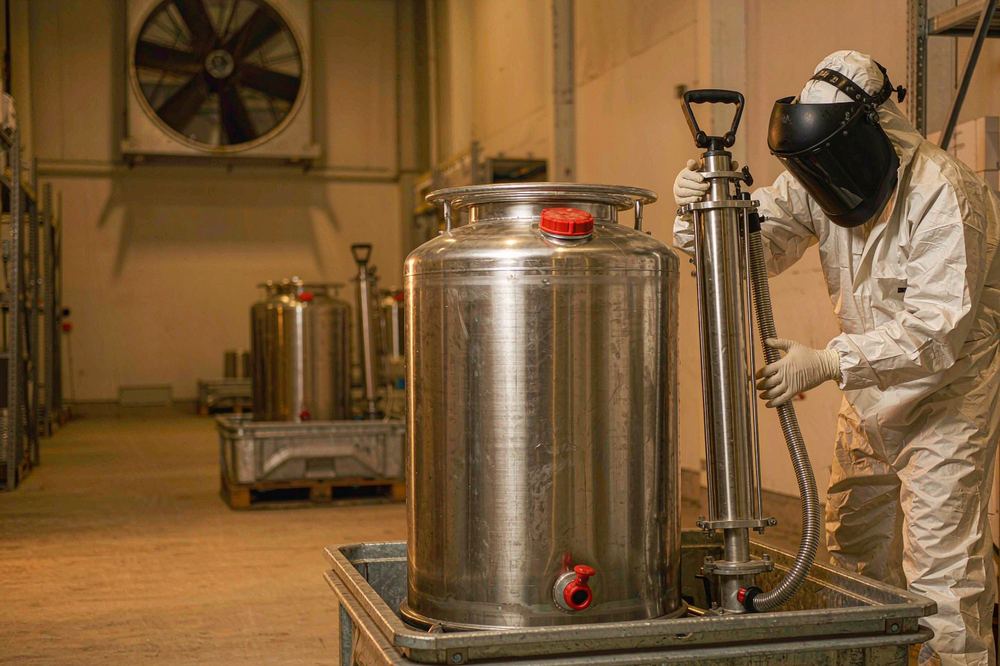
Five main fields use diethylenetriamine DETA, from epoxy curing to paper chemicals, because its three nitrogen sites react with many substrates. The epoxy curing line is the volume use on this site; the other four are intermediate roles in downstream products.
Field |
How DETA is used |
Why the amine structure helps |
Epoxy curing |
Room-temperature hardener for coatings, laminates and adhesives |
Five active hydrogens give high crosslink density at approx. 10.8 phr |
Wet-strength resin |
Intermediate for polyamide-epichlorohydrin paper resins |
Polyamine backbone builds the cationic wet-strength polymer |
Gas purification |
Amine scrubbing liquor for CO2 removal |
Three N-H sites absorb acid gases quickly |
Lubricant oil additives |
Intermediate for ashless dispersants |
Polyamine head anchors to soot and oxidation products |
Chelating and oil-field chemicals |
Intermediate for chelants and corrosion inhibitors |
Multi-nitrogen ligand binds metal ions |
For formulation background on the epoxy side, see the related notes on epoxy resin coatings and epoxy resin adhesives. Paper mills and gas-treating plants typically buy DETA by the isotank, while coating formulators take the 195 kg drum. If the end use is potable water or food contact, do not assume suitability; check with the compliance team first.
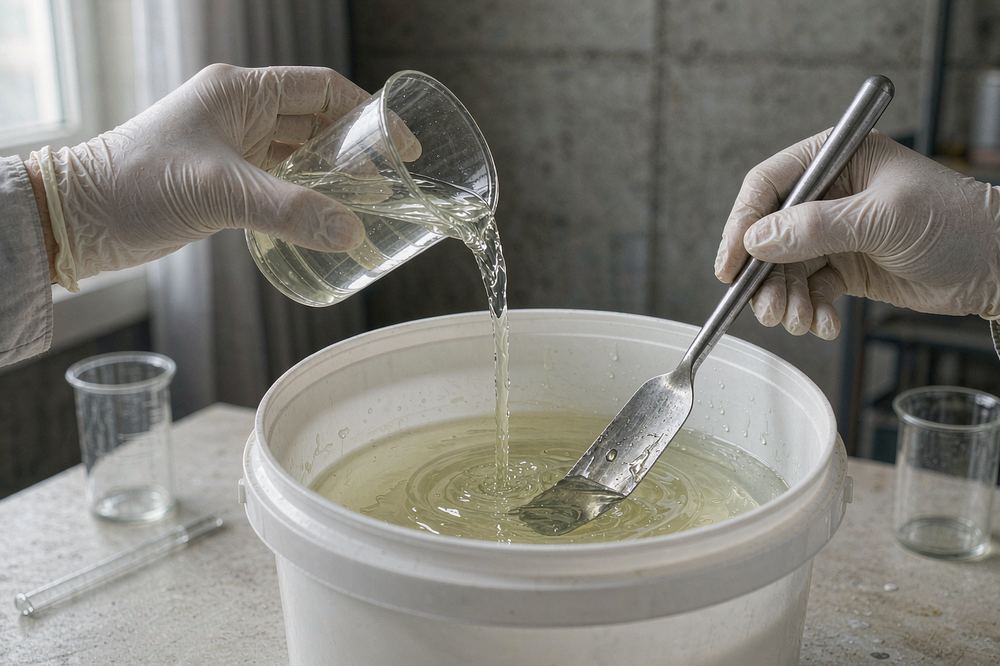
The published specification sets assay at 99% minimum, water at 0.50% maximum and color at 20 APHA maximum for diethylenetriamine DETA CAS 111-40-0. The CAS number belongs to the aliphatic ethylene amine family, and the COA for each lot lists the measured assay and water.
Dose by stoichiometry: phr equals AHEW over EEW times 100. With a theoretical AHEW of about 20.6 g/eq, an EEW 190 g/eq bisphenol A epoxy takes about 10.8 phr of DETA. Verify the lot AHEW on the COA and adjust within roughly plus or minus 5%.
Choose a slower grade when open time of an hour or more is needed, when casting thick sections, or when exotherm control matters. DMTDA at an amine value of 515-535 mg KOH/g, or polyetheramine D-230 at min. 7.5 mmol/g, gives far longer pot life than diethylenetriamine DETA.
DETA itself is colorless to light-yellow at max. 20 APHA, so fresh films stay light. However, all amine-cured epoxies can yellow under UV and heat aging; if long-term color retention is the priority, test the full system rather than relying on the hardener color alone.
Shelf life is at least 12 months from the date of manufacture in the original packing at ambient temperature. Store diethylenetriamine DETA in a well-ventilated area away from flames and direct sunlight, and close the cap tightly immediately after use to limit CO2 and moisture pickup.
Treat DETA as a corrosive, strongly alkaline, flammable liquid. Use goggles, a face shield, nitrile gloves and forced ventilation, keep it away from copper alloys, and follow the MSDS supplied with every shipment.
Packaging is a 195 kg drum or an isotank, and shelf life is at least 12 months from the date of manufacture in the original sealed packing at ambient temperatures.
Store the drums in a well-ventilated area, away from flames and direct sunlight, and close the cap tightly immediately after use. If a drum sits open in humid air, water pickup pushes the 0.50% limit and absorbed CO2 forms a carbamate haze; in practice, re-test assay and water before running an old lot. All safety information is provided in the Material Safety Data Sheet that accompanies every shipment.
For samples, current batch COAs, or help choosing between DETA and a slower grade, contact the product team on the diethylenetriamine DETA product page.

 IPv6-Netzwerk unterstützt