


Sprache
:

Sprache
:
DMAPA curing agent is a colourless primary amine, N,N-Dimethyl-1,3-propanediamine (CAS 109-55-7), that also carries a tertiary nitrogen. Its theoretical AHEW is 51.1 g/eq, so a liquid bisphenol A resin of EEW 190 needs about 27 phr, and this stoichiometry is where most dosage errors begin at mixing.
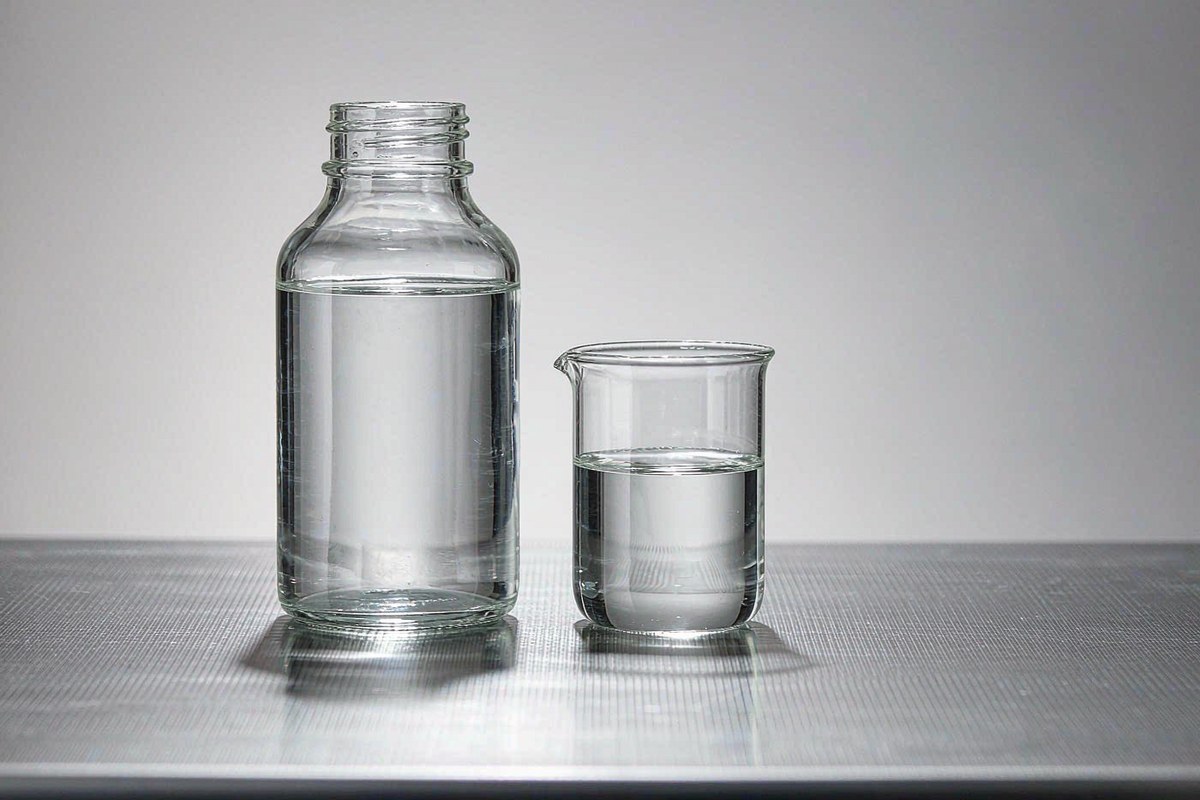
Figure 1. DMAPA as supplied: a water-clear, mobile liquid.
Product Code: DMAPA
Chemical Name: N,N-Dimethyl-1,3-propanediamine
CAS No.: 109-55-7
Product Category: Amine curing agent / functional chemical
Ambient-cure epoxy systems need an amine hardener fast enough for hand-applied coatings yet slow enough to be mixed in a pail, and DMAPA (CAS 109-55-7) sits at the fast end of that range.
The data reported here come from the public product page for N,N-Dimethyl-1,3-propanediamine and its published specification. Values the page omits are labelled literature or theoretical.
DMAPA is supplied as a colorless liquid in drum packages with a published purity of min. 99.5% and a water limit of max. 0.30%. Only four items are published, so the data below separate published values from structural inference.
Table 1 lists the identification data used throughout this paper. Table 2 gives the four published specification items; nothing outside it is a quality claim.
Table 1. Identification data of DMAPA (CAS 109-55-7).
Item |
Information |
Product Code |
DMAPA |
Chemical Name |
N,N-Dimethyl-1,3-propanediamine |
CAS No. |
109-55-7 |
Molecular Formula |
C5H14N2 (literature) |
Molecular Weight |
102.18 g/mol (literature) |
Active Hydrogens |
2, primary amine only |
Table 2. Published specification of DMAPA.
Item |
Specification |
Appearance |
Colorless liquid |
Color, APHA |
Max. 20 |
Purity |
Min. 99.5% |
Water |
Max. 0.30% |
Values marked published come directly from the DMAPA product page. Boiling point, flash point, density and viscosity appear in Table 3 as literature values for CAS 109-55-7 rather than specification limits. Water content is determined by Karl Fischer titration and color is measured according to the APHA scale.
Table 3. Physicochemical properties of DMAPA; literature and theoretical values for CAS 109-55-7.
Property |
Typical value |
Basis |
Boiling point |
132-140 °C at 1013 hPa |
Literature |
Flash point |
About 32 °C, closed cup |
Literature; ISO 3679 |
Density |
About 0.82 g/cm³ at 20 °C |
Literature |
Viscosity |
About 1.2-1.6 mPa·s at 20 °C |
Literature; ASTM D445 |
Amine value |
Not published; about 1098 mg KOH/g theoretical |
Theoretical; ISO 9702 |
AHEW |
51.1 g/eq theoretical |
102.18 ÷ 2 |
DMAPA carries a primary amine and a tertiary amine on one three-carbon chain, and the two nitrogens do different jobs in an epoxy cure.
The primary amine carries the two active hydrogens, so it alone sets the stoichiometry: 102.18 g/mol divided by two gives a theoretical AHEW of 51.1 g/eq. The tertiary nitrogen has no N-H hydrogen, so it contributes no crosslink and only catalyses the epoxy-hydroxyl reaction, shortening gel time. A short chain with two reactive nitrogens gives a fast, tightly crosslinked and hydrophilic network, so a slow, low-blush room-temperature system is not a realistic target for neat DMAPA.
Table 4 compares DMAPA with the amine hardeners most often quoted against it, using published figures where a product page states them.
Table 4. DMAPA against common amine curing agents, at published or theoretical values.
Property |
DMAPA |
Common alternatives |
Active hydrogens / AHEW |
2; 51.1 g/eq theoretical |
|
Viscosity, published |
Not published; about 1-2 mPa·s at 20 °C |
MACM 80-120 mPa·s; YLH-3101 300-1000 cps at 25 °C |
Water miscibility |
Miscible |
MACM insoluble; MXDA soluble; polyetheramine D-230 slightly soluble |
Blush tendency in humid cure |
High |
Lower for water-insoluble amines such as MACM |
Typical role |
Co-hardener, accelerator, amidoamine building block |
DETA, MXDA primary hardeners; MACM high-performance; YLH-3101 modified ready-to-use |
Color stability of stock |
Darkens in air once opened |
DACH also yellows in air; modified grades hold color better |
For a neat room-temperature coating, DMAPA alone is rarely the right answer. The defensible placement is three roles: an amidoamine building block condensed with fatty or dimer acids, a reactivity booster alongside slower polyetheramines, and a small-dose accelerator where DMP-30 is not wanted.
Rigid diamines are another route. 1,3-BAC and MACM trade higher viscosity for water resistance and strength, and N4-AMINE adds a fourth reactive nitrogen for higher crosslink density. If toughness matters more than speed, a polyamide such as YLH-5101 usually out-cures DMAPA on film properties.
Dosage follows the standard amine rule, phr = 100 × AHEW ÷ EEW, which for DMAPA reduces to 100 × 51.1 ÷ EEW because only the two hydrogens on the primary amine count.
Table 5. Theoretical DMAPA dosage against published resin EEW values.
Resin grade (published EEW) |
EEW, g/eq |
Theoretical DMAPA, phr |
184-190 |
26.9-27.8 |
|
Liquid bisphenol A epoxy resin YLE-127 |
176-184 |
27.8-29.0 |
165-175 |
29.2-31.0 |
|
Low-viscosity bisphenol A epoxy resin YLE-121 |
170-176 |
29.0-30.1 |
The error worth guarding against sits in the other nitrogen. If the tertiary amine is counted as active, the same calculation returns 34.1 g/eq and about 18 phr, and the batch gels on top while the underlayer stays soft. Whenever a mix cures unevenly, that arithmetic is the first thing to re-check.
A cross-check comes from the same hardener range. YLH-6004 lists AHEW 96 g/eq at 50 phr, and YLH-3101 lists 110 g/eq at 55-60 phr, both against a resin of EEW 190.
Treat every value above as a starting point. The working ratio depends on filler loading, resin purity and ambient temperature, and in practice it is confirmed by a gel-time check and a thin-film cure test on about 100 g.
Exotherm is the first variable to control: a loading near 27 phr against an EEW 190 resin releases a large amount of heat in a small mass, and the temperature spike shortens working time further.
• Keep trial mixes at about 100 g in wide containers; the same mix in a 1 kg pail can gel in a fraction of the time.
• Mix cool and post-cure warm. If the film blushes, raise the cure temperature rather than adding more amine.
• Watch humidity. Blush forms fastest in cold, damp shops, so schedule amine-cured work away from the wettest part of the day.
• Ventilate locally. Keep the drum closed and draw through a pump instead of pouring from an open bung.
• Wear nitrile gloves, splash goggles and protective clothing; DMAPA is corrosive and a skin sensitiser, and the MSDS carries the PPE list.
• Verify water content on opened drums. Moisture above the 0.30% limit shows up as haze long before a routine COA catches it.
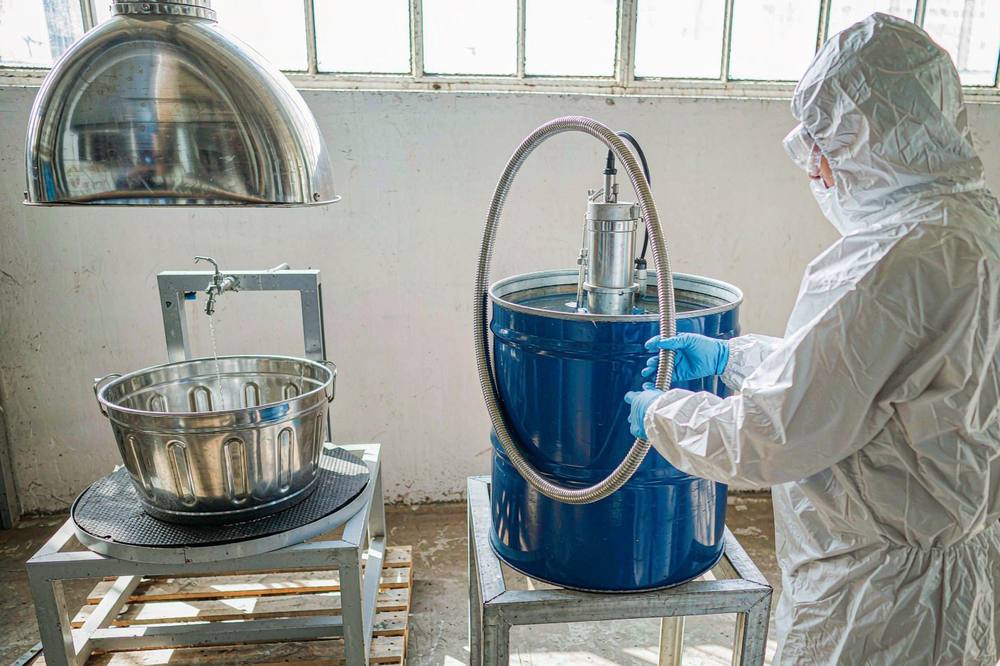
Figure 2. Decanting DMAPA under local exhaust ventilation.
The product page lists six application directions for DMAPA: cosmetic raw materials, dyestuffs, ion exchange resins, epoxy resin curing agent, non-cyanide electroplating additive, and fibre and leather treatment agent. Table 6 separates the epoxy role from the intermediate roles.
Table 6. Application areas for DMAPA and its role in each.
Application area |
Role of DMAPA |
Practical note |
Epoxy resin curing |
Reactive hardener and accelerator |
About 27 phr against EEW 190 resin; watch blush and exotherm |
Amidoamine hardeners |
Amine building block |
Condensed with fatty or dimer acids |
Ion exchange resins |
Amine functionalisation intermediate |
Amine source for polymer backbones |
Cosmetic raw materials |
Intermediate for betaine surfactants |
An industrial intermediate, not a cosmetic ingredient as supplied |
Dyestuffs |
Synthesis intermediate |
Dye intermediate manufacture |
Electroplating additive |
Non-cyanide bath additive |
Bath formulation is the customer's scope |
Fibre and leather treatment |
Treatment agent component |
Formulated into baths, not applied neat |
Neat casting in thick sections, food-contact claims, and any specification requiring a published amine value or gel time sit outside what this grade supports on paper.
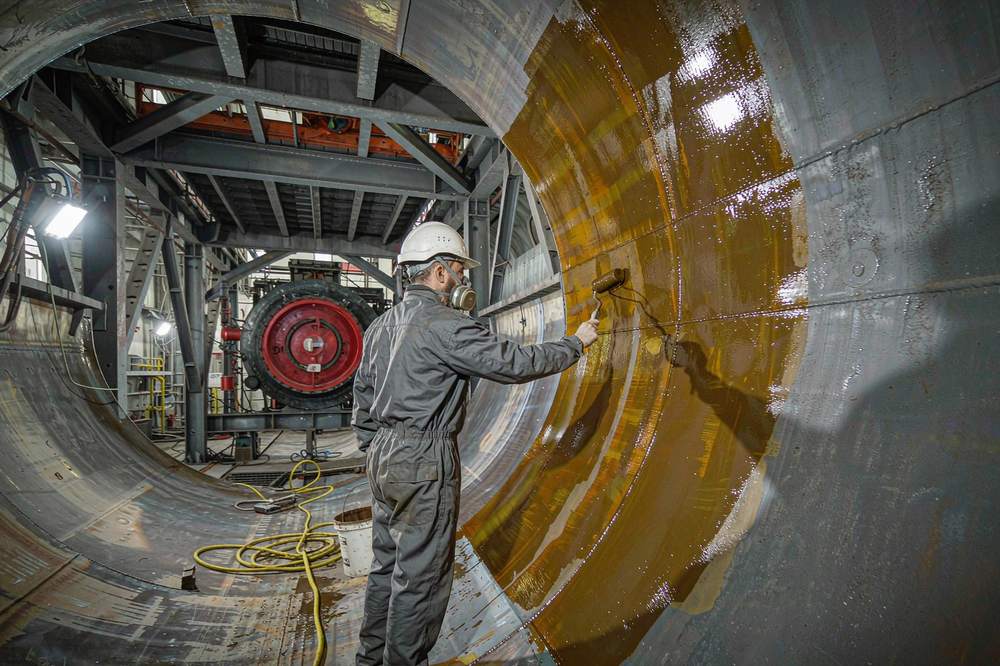
Figure 3. Amine-cured epoxy coating on the internal wall of a steel tank.
Two areas limit how DMAPA can be specified: the published data set itself, and the behaviour of the material in humid air or thick sections.
The specification covers appearance, color, purity and water only. No gel time, equivalent weight or official amine value is published, so any dosage plan stays theoretical until a batch COA confirms it. Blush is a property rather than a defect, and thick-section casting sits outside the grade because the exotherm of a neat amine in a large mass is hard to control.
Drum-to-drum variation exists on any amine line, so incoming checks on water content and color are recommended for every lot. Water content is determined by Karl Fischer titration and color is measured according to the APHA scale. DMAPA ships as a drum package with a published shelf life of at least 12 months in unopened packing at ambient temperature.
Store in a well-ventilated area away from flames and direct sunlight, and close the cap tightly after each draw. The material is flammable, corrosive and a skin sensitiser; the hazard information is in the Material Safety Data Sheet.
Divide 5,110 by the resin EEW. The theoretical AHEW of 51.1 g/eq gives about 26.9 phr at EEW 190 and about 31.0 phr at EEW 165. Filler and temperature shift the ratio, so verify by gel time first.
Two mechanisms produce that look. A white carbamate film is the amine reacting with CO2 in humid air; a tacky underlayer means under-stoichiometry from counting the tertiary nitrogen as an active hydrogen. Cure warmer and drier, and recalculate at 51.1 g/eq.
No, not as a one-for-one swap. YLH-3101 is a modified alicyclic hardener with a published AHEW of 110 g/eq, 55-60 phr loading and a 40-70 min gel time, and its modification exists to control blush. Neat DMAPA cures faster but blushes more.
It does not. The tertiary nitrogen has no N-H hydrogen, so it contributes catalysis but not stoichiometry, and the equivalent weight stays at 102.18 ÷ 2 = 51.1 g/eq. Counting three nitrogens returns 34.1 g/eq and roughly 18 phr, which under-cures the batch.
The published shelf life is at least 12 months in the original packing at ambient temperature, supplied as a drum package. No net drum weight is published, so confirm the packing list at order. Opened drums are closed tightly after each draw.
The product page describes the material as flammable and corrosive, one that will smoke and blacken in air. Low-molecular-weight amines absorb water and CO2 quickly, and the reaction shows up as darkening. Keep the cap tight.
This diamine (CAS 109-55-7) is fast, low-viscosity and water-miscible, and its theoretical AHEW of 51.1 g/eq gives about 27 phr against an EEW 190 resin.
Its practical roles are an amidoamine building block, a reactivity booster and a small-dose accelerator. Its limits are humid-cure blush, exotherm in thick sections, and no published gel-time or amine-value data.
Values quoted here are published data or figures labelled theoretical and literature; where the product page is silent, the current TDS / MSDS / COA governs. Grade availability for N,N-Dimethyl-1,3-propanediamine DMAPA is confirmed against a target EEW.
• Yolatech product page, N,N-Dimethyl-1,3-propanediamine DMAPA: https://www.yolatech.com/nn-dimethyl-13-propanediamine-dmapa-cas-109-55-7 (accessed 2026-10-09).
• Yolatech Technical Data Sheet, Material Safety Data Sheet and Certificate of Analysis for DMAPA, CAS 109-55-7 (available on request).
• ASTM D1652, epoxy content of epoxy resins (EEW).
• ISO 3001, determination of epoxy equivalent.
• ISO 9702, amine group nitrogen content of amine epoxide hardeners.
• ASTM E203, water content by Karl Fischer titration.
• ASTM D1544, Gardner color of transparent liquids.

 IPv6-Netzwerk unterstützt